






How to Get an Accurate Plastic Mold Quotation
The 4 steps to run before you ask for a price. The factors that actually move mold cost. And the mistakes first-time China buyers keep making.
A clean plastic mold quotation starts before you ever send the RFQ. China’s plastic mold demand grew 6% year-on-year in 2020, adding 1.47 million tons. By 2022 it hit roughly 26.91 million tons. The supply base is deep. The risk is picking the wrong shop.
Price matters. So does delivery. But the real filter is whether the supplier can hold quality on shot 100,000 — not just shot 1.
Ask about their warranty terms. Ask what happens if T1 fails. A shop with nothing to say here is a shop you skip.
Delivery slips kill production lines. Get a real timeline, not a sales timeline. Companies with a long track record and verifiable references are your safer bet.
Your supplier needs to understand your part, not just cut steel. They should push back on bad draft angles. They should ask about gate location before you do. That’s what an actual engineering partner looks like.
If you’re hunting for one, talk to other buyers in your industry. Ask for references on parts similar to yours. A shop that built medical housings has a different DNA than one that built toys. Match the experience to your part.
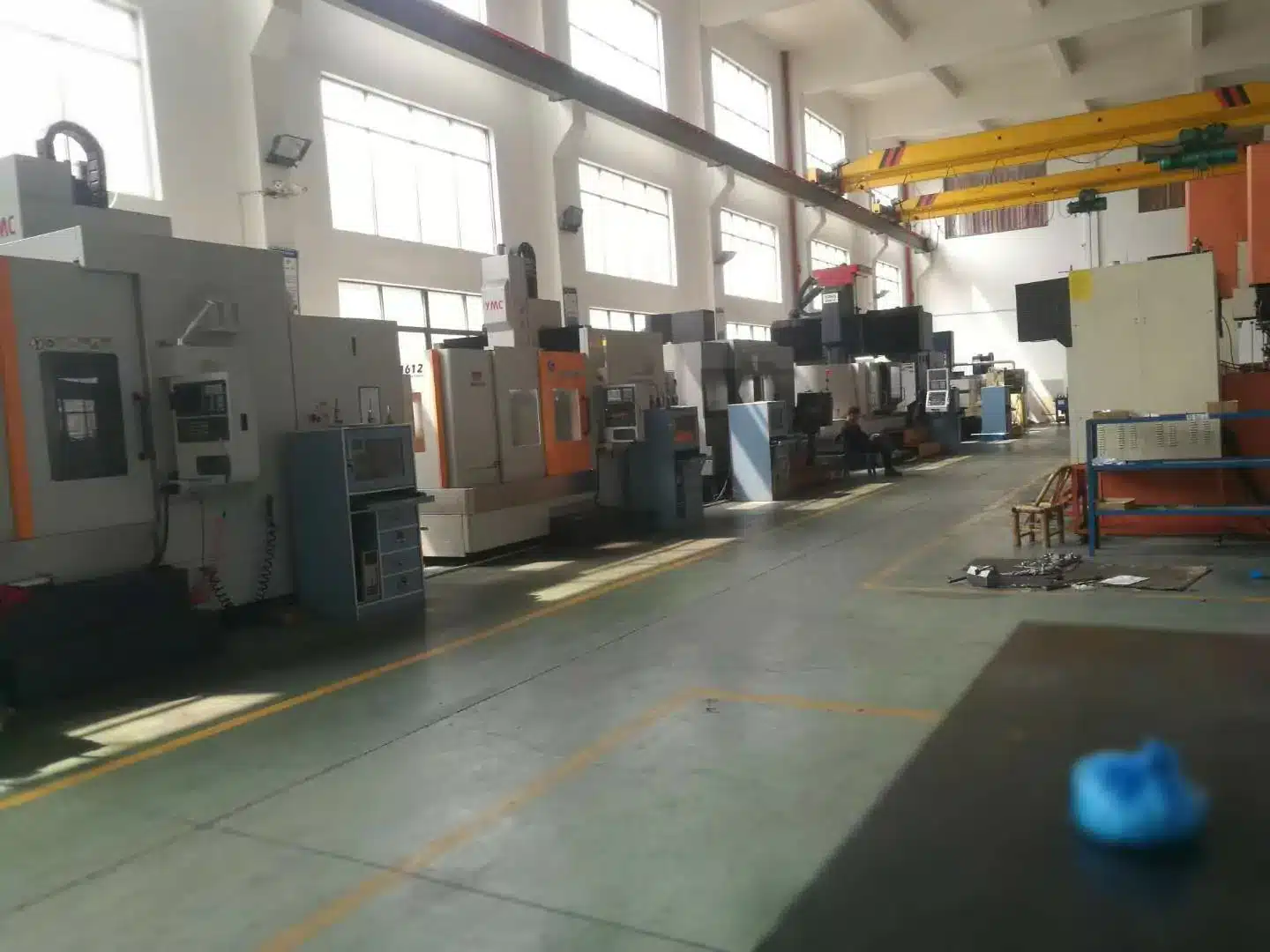
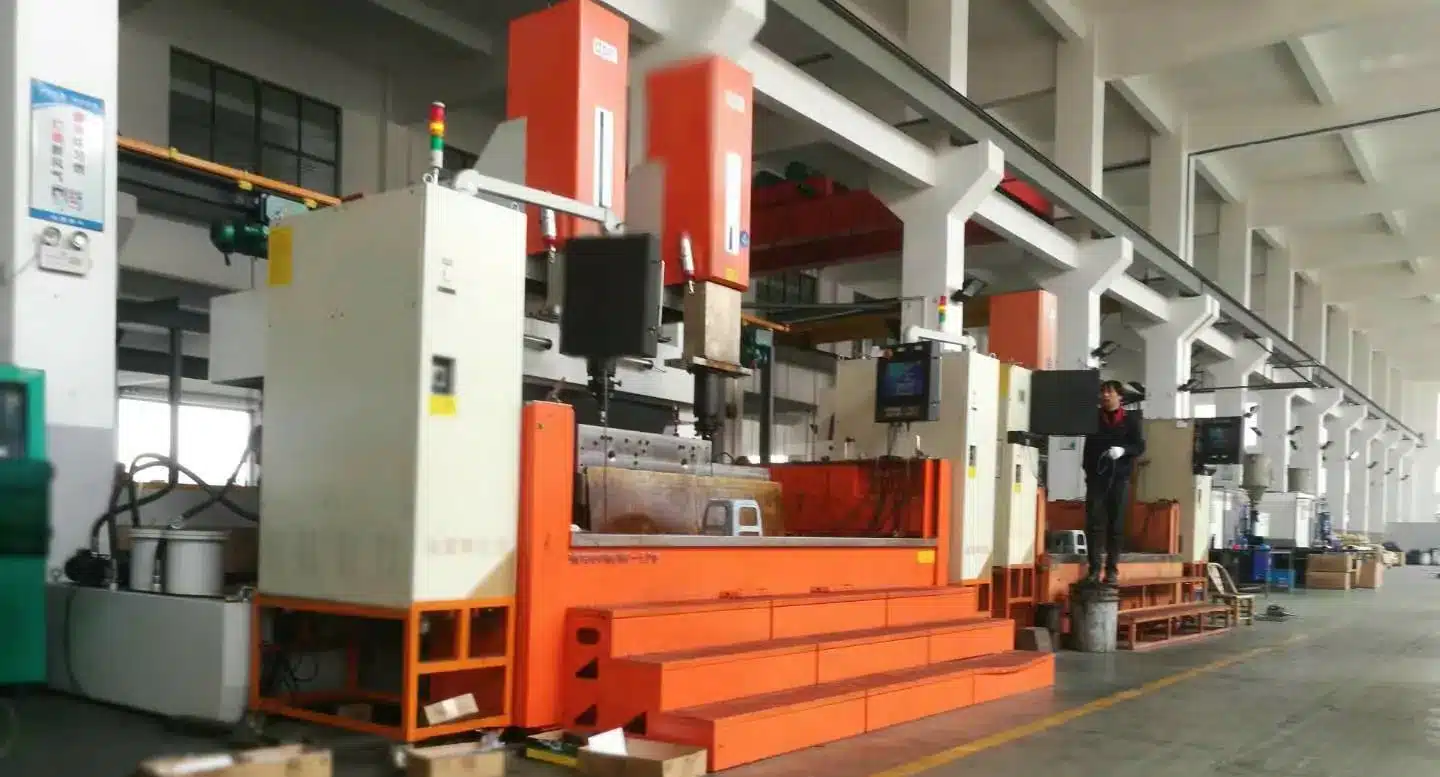
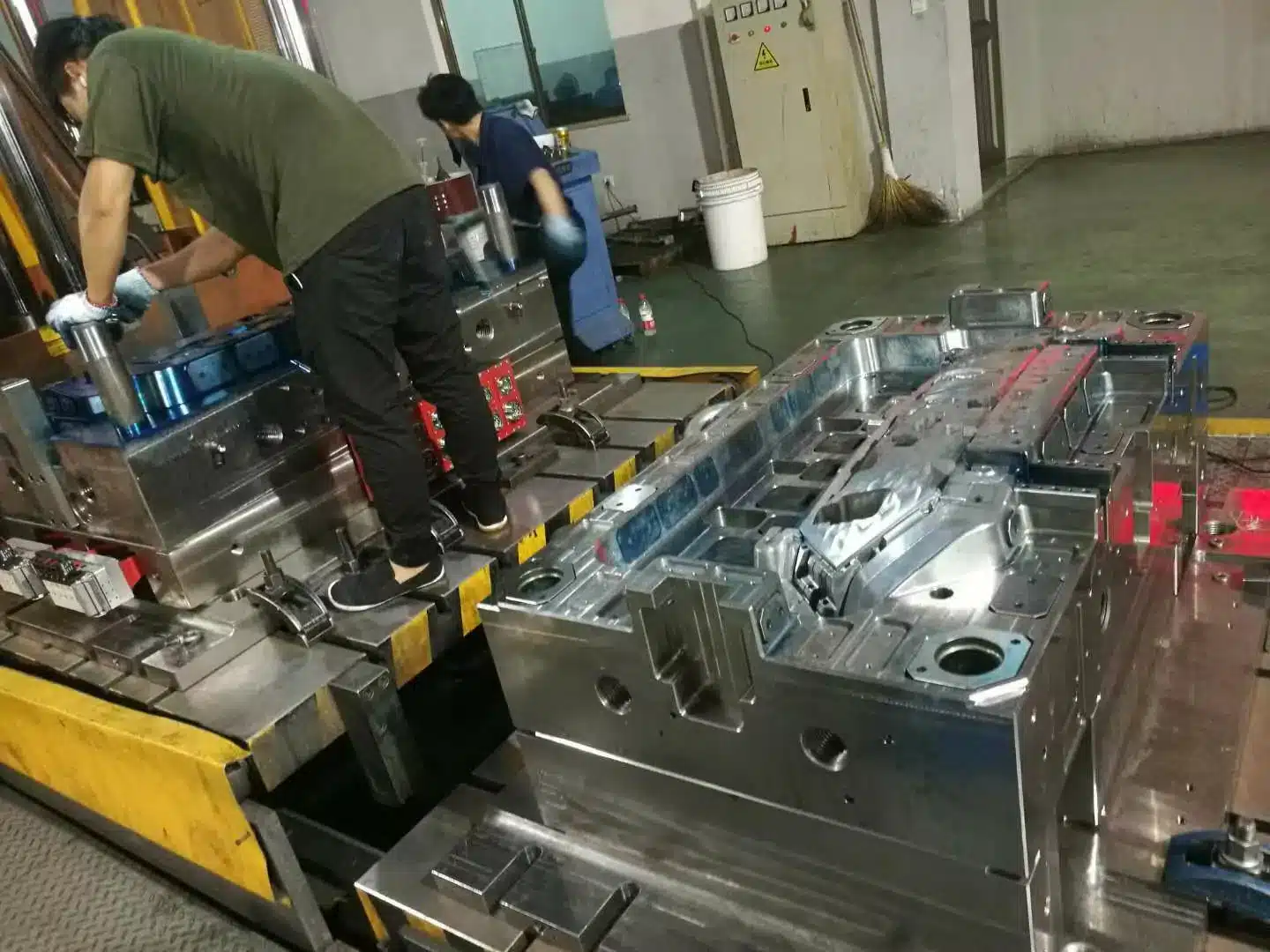
Skill levels in China keep climbing. More buyers in the US, EU, and Australia now run tooling here. Chinese plastic mold factories have closed most of the gap on technical execution. Communication has also gotten faster — see also China’s mold industry reports.
Repeat buyers know the rhythm. First-timers don’t. From eight thousand miles away, language and technical detail are the two walls you hit first.
Most first-time buyers I talk to have never sourced custom plastic parts before. The industry is technical. A good quote needs back-and-forth between you and the supplier. The decisive step is how clearly you describe your part.
Most buyers ask for a price on day one. That price is almost always wrong. Below is the prep work that gives you a quote you can actually trust.
Injection molded parts are not simple to make. You build the mold first. Then you mold the part. Then you finish or assemble it. A lot of information moves between you and the shop. Getting your requirements across clearly is job one.
I’ve seen quotes built from a hand-drawn sketch with no material spec. The buyer writes “soft” or “hard” and stops there. That isn’t enough. Soft could be TPE, LDPE, or PP. Each one changes the mold, the cycle, and the price.
Trusted by Engineers & Product Teams Worldwide
“I'm glad to inform you that all plastic parts are perfect!!! We are delighted, and therefore there are good chances to continue our relationship for any coming new project.”

“Steven is a very detail-oriented project manager and engineer who can solve problems creatively and also provides excellent service. It was a pleasure working with him.”

Injection molding cost breakdown
How to use the Comparison Tool:
- Enter your initial production parameters and click "Save as Scenario A".
- Adjust specific variables (e.g., reducing Cycle Time from 35s to 25s) and click "Save as Scenario B".
- Click "Compare A vs B" to visualize the Total Unit Cost difference and detailed breakdown.
Gain Instant Cost Insights
Use our "Scenario Comparison" feature to benchmark production strategies. By saving different setups, you can visualize how small changes in Cycle Time or Machine Rates impact your bottom line. Our dynamic charts allow you to optimize your sourcing strategy before cutting steel.
Enter parameters to calculate real-time costs with what-if comparison
Scenario comparison
| Cost item | Scenario A | Scenario B |
| Material | - | - |
| Processing | - | - |
| Scrap loss | - | - |
| Pkg & logistics | - | - |
| Total | - | - |
| Variance | - | |
How costs are calculated
Processing = Rate/3600 × Cycle ÷ Cavities
Scrap = Base × ScrapRate ÷ (1-ScrapRate)
Total = Sum of all costs
The Process
4 Steps Before You Ask for a Plastic Mold Quotation
A useful quote needs prep work. Skip these steps and you’ll get a number that changes three times.
- 01Talk to a mold engineer firstFind a mold or injection molding engineer you can actually talk to. Walk them through the part, the volume, the assembly, and your budget. A good one will reverse-engineer your concept on the spot. They’ll tell you which resin fits, where the gate should sit, and how to design the product for tooling. You’ll also get a rough cost band and timeline. That conversation alone saves weeks later.
- 02CAD designYou need a real 3D model before anyone can quote tooling. CAD turns the idea into something the shop can cut steel from. The model carries every spec the toolmaker needs — wall thickness, draft angle, parting line, boss and rib placement. Engineers tweak the file after prototype feedback, then lock it for tooling. Talk to your design team often. A wrong rib in CAD becomes a wrong rib in steel.
- 03Rapid prototypingRapid prototyping with 3D printing lets you iterate cheap. You hold the part. You check fit, look, and stiffness. You catch the bad boss before it goes into a P20 core. Small SLA or FDM runs in China cost roughly $50–60 per iteration. That’s nothing compared to fixing a sink mark after T1.
- 04QuotationNow you send the updated design out for quotes. The rule is simple. The more your supplier knows about the part and the structure, the closer the quote lands to the real number. Vague RFQs get padded quotes. Detailed RFQs get sharp ones.
Product Strategy
How to Copy an Existing Product
Copying an existing part is faster than designing from zero. Send the supplier the sample and your spec sheet. The work and fees get sorted out after.
Documenting and Sending Your Sample
Got one sample and can’t ship it? Photograph it properly. Shoot all six faces. Mark every undercut, hole, and dent with position and size on the image.
Add the overall length, width, and height. Pull dimensions on key features. More detail is always better — short detail is what causes redo loops.
Look for the resin code on the part. It’s usually a small triangle on the back wall. Note the gate location and gate size. Send the actual sample to your chosen supplier when you can. They’ll reverse-engineer the original mold’s logic and skip a lot of guessing.
Finding a Winning Product
Picking a winner takes judgment. The product needs to be on-trend and have margin worth copying. Hot but unprofitable is not a business.
Don’t be shy about copying. Look at how many soda brands chase Coca-Cola or how many burger chains lift from McDonald’s. The play is to find a proven format and execute it better — not to reinvent the wheel for sport.
“If you want to be successful, find someone who has achieved the results you want and copy what they do and you’ll achieve the same results.” — Tony Robbins
Understanding Your Competitors
Study what your competitors ship. Which SKUs sell? What do reviewers complain about? That data tells you what to copy and what to fix in your version.
If their product doesn’t match your goal, skip them. Don’t waste time benchmarking against a brand selling to a different buyer.
Tracking Your Competitors
Set Google Alerts on competitor brand names, product URLs, and your niche keywords like “best toothbrush.” You’ll see what they launch, when they launch it, and whether it lands. That tells you what’s worth copying.
Creating Copycat Product Listings
Pick an Amazon FBA listing that’s already profitable. That’s your target. Real demand exists, so you don’t have to create a market — you just need to enter one with a sharper price.
Search your niche keyword on Amazon. Try “dog chew toy.” Open the top 10 listings. Note what each one does well and where each one is weak. Your version fixes the weak parts.
Expanding Your Offerings
Already sell one product? Add the next one buyers reach for. Coffee beans pair with mugs. Mugs pair with hot chocolate. Each add-on lifts order value without new traffic.
Bundle related items at a small discount. You sell more units per cart without spending more on ads.
Pricing Factors
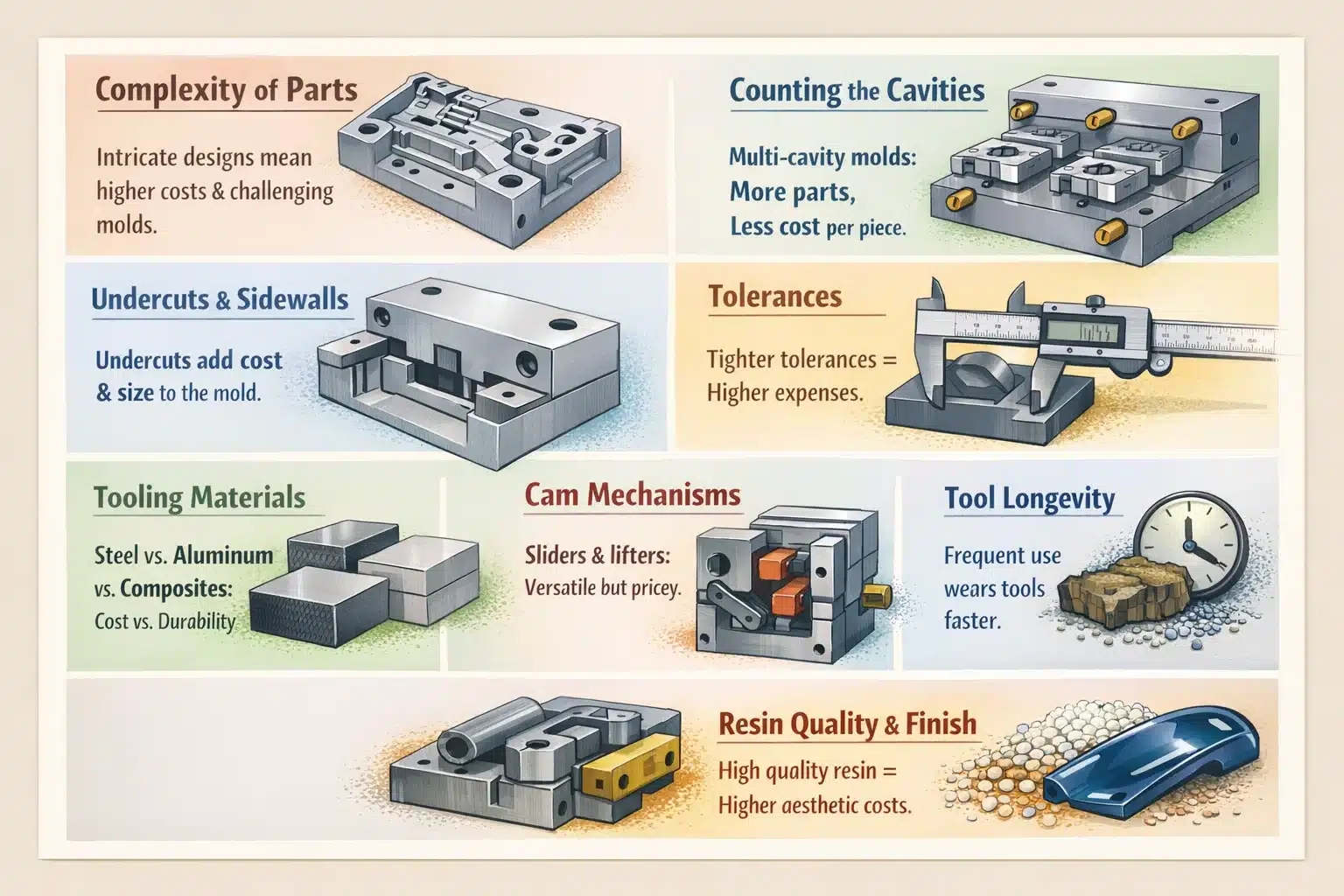
4 Things That Actually Move Plastic Mold and Injection Part Price
Most quotes we review miss the real cost drivers. Here are the four that matter before you send an RFQ.
Quantity
Volume sets the mold. If you only need 10,000 parts, don’t ask for a 500,000-shot tool. The steel, the design, and the build are not the same job.
At 10,000 parts, a 4-cavity mold often gets it done. At 500,000, you’re looking at 10 or 12 cavities — sometimes more. More cavities pull harder steel, tighter machining, and longer build time. Tool cost goes up, but the per-part cost spreads thin. Low volume on a big tool is the wrong math.
Real case: ABS part. Annual demand 1,500 sets. Internal thread, needs unscrewing. A fully automatic unscrewing mold is expensive. We switched the thread to an insert. Mold cost dropped to about 2/3 of the auto version. Injection cost barely moved. That’s the kind of call the right supplier makes early.
Color
Dark parts are usually cheaper to mold than light or transparent ones. Regrind goes back into dark parts without showing. White or clear parts can’t hide regrind, so material cost climbs.
Sprue and runner regrind matches virgin material in most properties. The barrel of the press isn’t always perfectly clean either. A trace of the last color can show through on a clear or white shot — it can’t show on a black one. Same defect, different outcome.
Tolerance
Tight tolerance parts cost more. A lot more. Loose tolerance shells are forgiving on steel, machining, and process. Tight tolerance jobs need premium mold steel, EDM time, and a tuned process window. Only spec tight tolerance where the part actually needs it.
Plastic Materials
Default to conventional plastics unless the part really needs engineering grade. The price gap is brutal at scale. Nylon 66 flame-retardant V0 costs more than 4× standard PP. Ordinary ABS is roughly 1.5× PP. Across 100,000 parts, that math is real money.
Some resins are corrosive on the tool. That means harder steel, better surface treatment, and more maintenance over the mold’s life. Mold steel S136 runs more than 5× the price of P20.
- Nylon 66 flame-retardant grade (V0) — more than 4× the price of conventional PP
- Standard ABS — about 1.5× the price of PP
- Mold steel S136 — more than 5× P20, needed for corrosive resins or clear parts
- Corrosive materials drive higher steel grade and more maintenance over time
Of the three RFQ methods — CAD files, photos, and physical samples — sending a physical sample is still the best move. The molder reads the part’s geometry directly. They can also see how the prior tool was built. That removes guesswork during your build.
Buyer’s Checklist
How to Make Your Plastic Mold Purchase Easier
Buying a mold takes back-and-forth. There will be calls, drawings, revisions. These habits cut the noise and get you to a good tool faster.
9 Tips for a Smoother Mold Purchase
- Write a detailed RFQ. Even good toolmakers can’t read your mind. Spell out cavity count, resin, expected mold life, and any warranty terms you want.
- Tighter RFQ, tighter quote. Tell the supplier why you need the number. If it’s an internal estimate, say so. Burning a shop’s quoting time when you won’t buy is bad practice and they remember.
- Don’t shop a moldmaker’s IP. Their recommendations and design hints belong to them. Taking that work to a cheaper shop to execute is theft. If another shop volunteers ideas of their own, that’s fair game.
- Build a relationship with your moldmaker. Stay close on cost, schedule, and volume forecasts. The longer you work together, the better the next tool gets.
- Keep an open door during the build. Most shops want to share progress photos and weekly updates. Read them. Ask questions. Silence is where surprises grow.
- Pay on time. Mold shops run on tight cash. Late payment slows your build. It’s that simple.
- Design changes change the mold. If you change part geometry mid-build, the tool changes too. Quote and timeline both move. Lock the design before steel is cut.
- Define what “mold ready” means. Is it after T1? After a sample approved by you? Spell it out in the PO. Most shops call a mold finished when it can shoot a usable part.
- Cheap quotes have a reason. The low number is low because the shop cut something — steel, polish, runner system, or warranty. Pay for the right mold, not the cheapest one.
You get the mold you pay for. Your finished part is only as good as the tool that made it. Spec the mold properly the first time.
Get an Accurate Plastic Mold Quotation from China in 4 Steps
- Component design (7 days): Send your 3D files or work through custom design with Topworks.
- Prototyping — optional (2–3 days): Build a physical prototype to check fit and function.
- Tool design (3–7 days): Topworks engineers design the mold against your spec.
- Mold build and production: Topworks cuts steel, runs T1, and ships parts.
Why work with Topworks: Tooling up to 35% below Western pricing. Tight turnaround. 15+ years building plastic molds. Quality materials and modern equipment behind every tool.
Ready for an Accurate Plastic Mold Quotation?
Topworks pairs hands-on injection molding experience with real project management. Your next tool lands on time, on spec, and on budget.
Get a Free Consultation