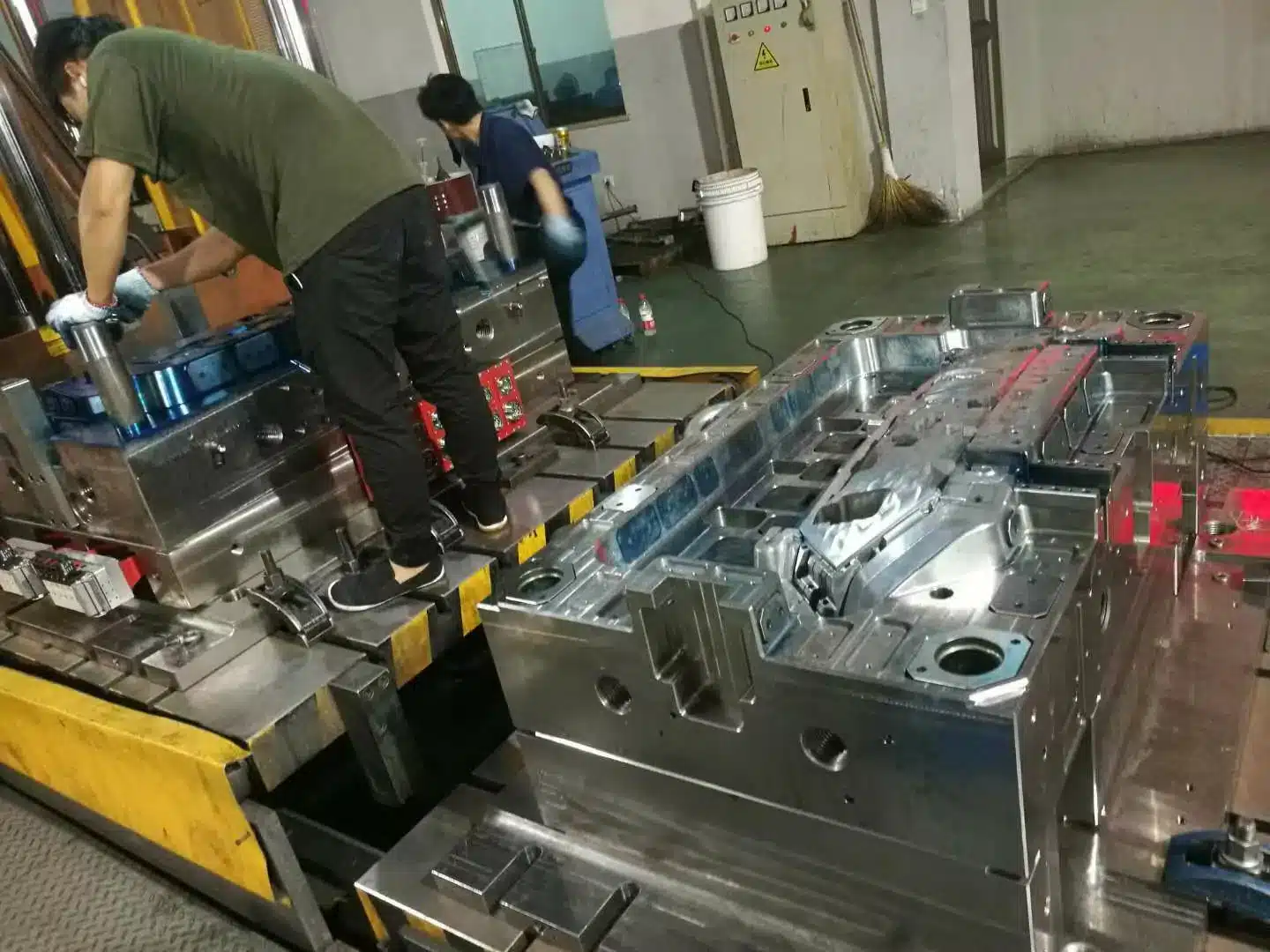

Choosing a China PC/ABS Injection Molding Manufacturer: What Goes Wrong in Lot Three
By Steven Cheng — 20 years building molds and running production in Huangyan, Taizhou, China
The first shipment was perfect. Black handheld meter housings, light texture, a snap-fit battery door. The customer’s QA team in Ohio signed off first article and ordered 20,000 more.
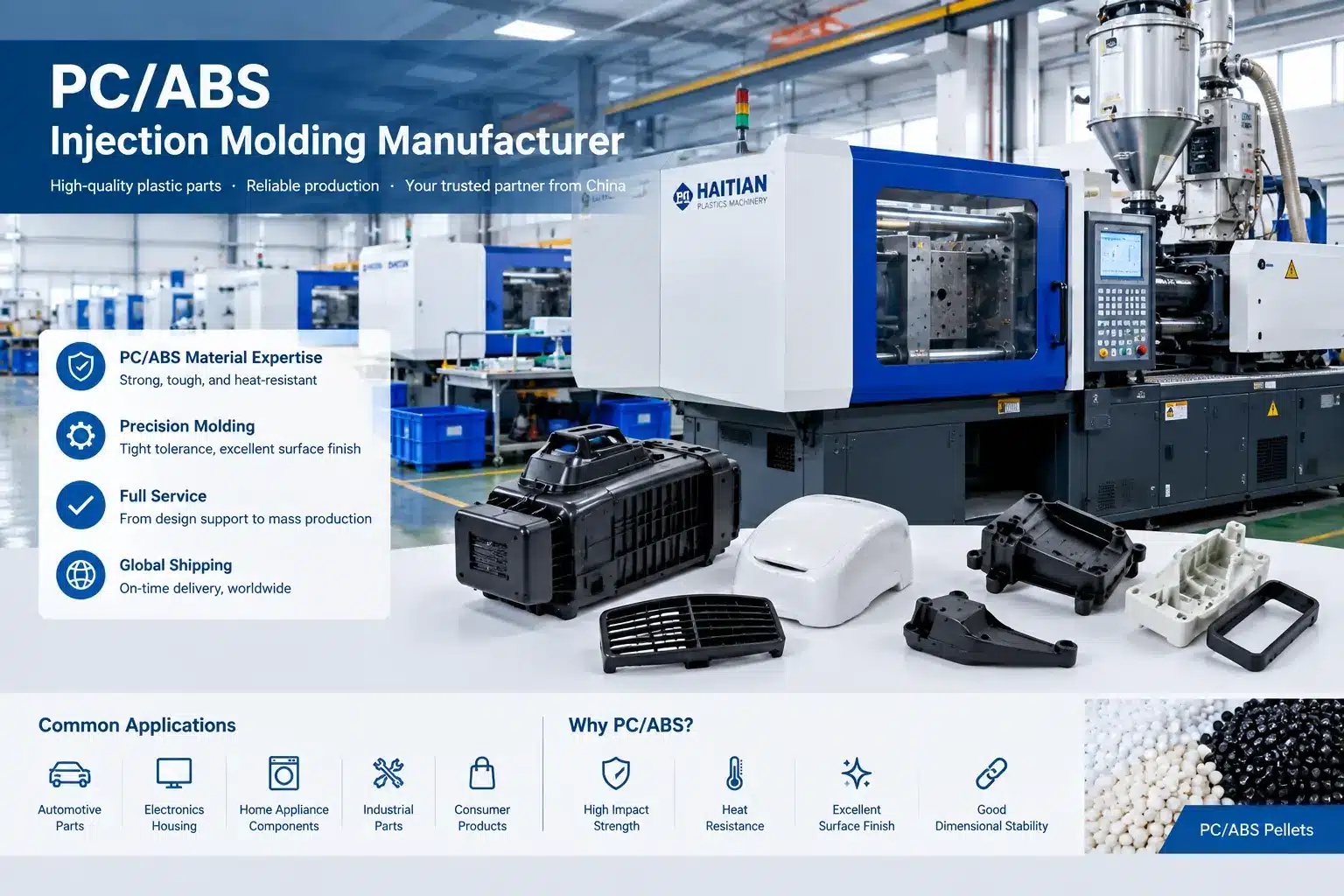
Six weeks after the second lot landed, the field returns started. Screw bosses split when technicians drove the screws. A few hundred housings had a flaky, layered look near the gate. When the parts came to us for a second opinion, the fracture faces told the story: the resin wasn’t the grade on the drawing. The previous supplier had switched from a name-brand PC/ABS to a cheaper local “equivalent” and cut the drying time in half to keep up with the schedule.
That’s the risk you’re actually managing. A China PC/ABS injection molding manufacturer is a molder that builds the tool and produces parts from a polycarbonate/ABS blend, and the gap between a good one and a bad one almost never shows in T1 samples. It shows in lot three, after the attention has moved on to the next customer.
What follows is the checklist I’d want if I were on your side of the table.
Outline
| Section | Heading | Purpose |
|---|---|---|
| 1 | Do you actually need PC/ABS? | Stop buyers from over- or under-specifying the material |
| 2 | The resin is where most problems start | Brand-name vs. “equivalent” resin, and how to verify |
| 3 | Drying: the step nobody shows you on the factory tour | Moisture, splay, and what to ask |
| 4 | How should a PC/ABS mold be built? | Steel, gating, venting, mold temperature |
| 5 | Design details your DFM report should flag | Walls, bosses, draft, chemical exposure |
| 6 | T1 sample defects — and whose fault they are | Defect table with root cause and owner |
| 7 | What PC/ABS parts cost from China | Tooling and piece-price breakdown |
| 8 | Flame-rated parts need extra homework | UL 94, Yellow Cards, regrind |
| 9 | Paint, plating, texture | Secondary operations |
| 10 | China PC/ABS injection molding manufacturer vetting: questions for the first call | Supplier screening |
| 11 | Red flags in the quote itself | Reading quotes critically |
| 12 | Getting parts landed in the US | Lead time, freight, tariffs |
| 13 | FAQ | Long-tail questions |
Do you actually need PC/ABS?
You need PC/ABS when general-purpose ABS isn’t tough enough or heat-resistant enough, but full polycarbonate is overkill, too notch-sensitive, or too hard to mold. It’s the standard choice for electronics housings, power tool shells, medical device enclosures, and automotive interior trim that must survive drops, some heat, and a flame rating.
I say this to customers every month: don’t pay for PC/ABS if ABS does the job. For a desk accessory, a toy, or a housing that never gets hot or dropped, ABS is cheaper per kilogram and a little more forgiving to mold. Just use ABS.
PC/ABS earns its price when one of these is true:
- The part gets dropped on concrete — handhelds, meters, remotes, tool housings.
- It sits near a motor, battery, or power supply and runs warm.
- It needs a UL 94 V-0 or 5VA rating without going to a filled or specialty resin.
- It has thin walls with snap fits that crack in ABS during cold-weather assembly.
| Property (general-purpose grades) | ABS | PC/ABS | PC |
|---|---|---|---|
| Impact strength, especially cold | Moderate | High | High, but notch-sensitive |
| Heat resistance | Lowest | Middle | Highest |
| Moldability in thin walls | Easy | Good | Harder — high melt viscosity |
| Chemical stress cracking | Moderate | Moderate — watch disinfectants | Poor with many solvents |
| Relative resin cost | Lowest | Middle | Highest |
| Flame-rated grades available | Yes | Yes, very common | Yes |
The verdict in plain words: PC/ABS outperforms ABS in impact and heat resistance, and it molds more easily than pure polycarbonate in thin-walled housings. That middle position is exactly why it dominates electronic enclosures. Exact heat deflection and impact numbers vary a lot with the PC content of the blend, so read the datasheet for the specific grade rather than trusting any generic table (including this one).
The resin is where most problems start
Most PC/ABS failures we investigate for new customers trace back to the pellets, not the mold.
Name-brand PC/ABS families — Covestro Bayblend, SABIC Cycoloy, LG Chem Lupoy, Chimei’s PC/ABS grades — come with published datasheets, UL listings, and lot traceability. Chinese domestic compounders also make PC/ABS, and some of it is perfectly good. Some of it is blended with recycled PC of unknown history. The “equivalent” on a quote can mean either, and you can’t tell by looking at a molded part.
Recycled or off-spec PC/ABS causes brittle bosses, delamination near the gate, and color drift between production lots. None of those show up reliably in a 50-piece T1 run.
What to require in writing:
- The exact resin brand and grade on the quote, not “PC/ABS or equivalent.”
- A certificate of analysis (COA) and the resin lot number for every production lot.
- Photos of the resin bags with labels when material arrives — ask, it costs the supplier nothing.
- A clause saying any material change needs your written approval and a new sample.
If your supplier gets vague when you ask for the resin lot number, that’s your answer.
Drying: the step nobody shows you on the factory tour
PC/ABS must be dried before molding because the polycarbonate phase absorbs moisture and breaks down (hydrolyzes) in the barrel. Typical drying is 2–4 hours at about 100–110°C (212–230°F) in a desiccant dryer, targeting moisture below roughly 0.02%. Undried resin causes splay and weaker, more brittle parts.
The frustrating part is that wet PC/ABS doesn’t always look bad. Splay — the silver streaks radiating from the gate — is the visible symptom. The invisible one is molecular weight loss: the part looks fine and cracks under a screw or a drop test later.
I’ve watched a good dryer fail anyway. Night shift, hopper running low, an operator topped it up straight from the bag to avoid stopping the machine. The next 40 minutes of housings had splay, and the ones without visible splay went to the scrap bin too, because there was no way to know which were weakened. That’s the right call, and it’s the call a cost-cutting shop doesn’t make.
Ask your supplier:
- Do you use desiccant dryers or just hot-air hopper dryers? (Hot-air alone is not enough in a humid Zhejiang summer.)
- How do you log drying time and temperature per lot?
- What happens to parts molded when the dryer alarm trips?
A good shop answers the third question without hesitating.
How should a PC/ABS mold be built?
A PC/ABS mold should be built from pre-hardened or hardened tool steel, with generous gates, good venting, and temperature control strong enough to hold the mold at roughly 60–90°C (140–194°F). Undersized gates and poor venting are the two tooling mistakes that cause most PC/ABS cosmetic defects.
Steel choice follows volume and finish:
- P20 / 718H — fine for most housings up to a few hundred thousand shots with textured surfaces.
- NAK80 — when you need a high-polish or tight-texture cosmetic surface.
- S136 (stainless) — for high-gloss parts and for flame-retardant grades, which tend to leave deposits on the steel (called plate-out) and can be harder on non-stainless cavity surfaces.
Gating matters more than people expect. PC/ABS is shear-sensitive. Push it through a tiny pin gate at high speed and it overheats locally, and you get delamination — surface layers peeling like mica near the gate. We size gates larger for PC/ABS than for the same part in ABS, and we prefer to gate into a thick section so the melt doesn’t have to jet into a thin wall.
Mold temperature is the other one. Running PC/ABS cold (below about 50°C) makes filling easier on paper but leaves higher molded-in stress, poorer surface gloss, and weaker knit lines. A proper mold temperature controller on each half is standard equipment for this material, not an extra.
Machine size for a typical handheld housing lands somewhere around 120–280 tons of clamp force. If a supplier proposes a much larger press for a small part, ask why — oversized machines mean long residence time in the barrel, which degrades PC/ABS.
Design details your DFM report should flag
A decent DFM report on a PC/ABS part should comment on all of these. If it’s silent on them, the report was generated, not reviewed.
| Design feature | Typical target for PC/ABS | Why it matters |
|---|---|---|
| Nominal wall | 1.5–3.0 mm (0.06–0.12 in) | Thinner fills poorly; thicker invites sink |
| Rib thickness | 50–60% of nominal wall | Heavier ribs sink on the cosmetic face |
| Draft, smooth surfaces | 1° minimum | PC/ABS grips cores harder than ABS |
| Draft, textured surfaces | Add roughly 1–1.5° per 0.001 in (0.025 mm) of texture depth | Prevents drag marks during ejection |
| Screw bosses | OD about 2–2.5× screw diameter, cored out | Solid bosses sink; thin ones split |
| Inside corners | Radius at least 0.5× wall | Sharp corners concentrate stress and crack |
| Shrinkage | About 0.5–0.7%, grade dependent | Toolmaker must use the right value |
Two items deserve extra attention because they cause field failures, not just cosmetic rejects.
Chemical exposure. PC/ABS can stress-crack when it contacts certain chemicals while under load. Anaerobic threadlockers on metal inserts, some alcohol-based disinfectants, and certain lotions and sunscreens are the repeat offenders we see. If your housing gets wiped with hospital disinfectant or handled by users wearing sunscreen, tell your supplier and test with that exact chemical. Medical-grade PC/ABS blends exist specifically for this problem.
Screw bosses. The meter housings in my opening story cracked partly because of bad resin and partly because the bosses were designed for a machine screw with a pilot hole that was too small. Use screws designed for thermoplastics, or specify heat-set or ultrasonic brass inserts for anything that gets reassembled in service.
T1 sample defects — and whose fault they are
T1 samples always have something. What matters is whether the fix belongs to the toolmaker, the process technician, or your design — because that decides who pays and how long it takes.
| Defect | What it looks like | Usual cause | Who owns the fix |
|---|---|---|---|
| Splay | Silver streaks from the gate | Wet resin | Supplier (process) |
| Delamination | Flaky, peeling layers near gate | Shear heating, contamination with another resin | Supplier (tool or process) |
| Sink marks | Dips opposite ribs or bosses | Thick sections, low pack pressure | Shared — often design |
| Weak knit lines | Visible line, cracks on flex | Low melt/mold temp, poor venting | Supplier; sometimes gate relocation |
| Gloss variation | Shiny and dull patches | Uneven mold temperature | Supplier (tool cooling) |
| Drag marks | Scratches along draw direction | Insufficient draft on texture | Design, then tool rework |
| Warp | Part won’t sit flat | Uneven walls or cooling | Shared |
Splay and delamination on T1 are process or tooling problems, full stop. Your supplier should fix them at their own cost. Sink and drag marks often trace back to the design, and a fair supplier will have warned you in the DFM report before cutting steel. If they didn’t warn you and now want to charge for the fix, that’s a conversation worth having in writing.
What do PC/ABS parts cost from China?
For a typical PC/ABS electronics housing, China tooling usually runs about $5,000–$30,000 USD depending on size, cavities, slides, and surface finish. Piece prices are driven mostly by resin weight and cycle time; brand-name PC/ABS resin commonly costs roughly 1.5–2× general-purpose ABS per kilogram.
A rough breakdown for a mid-size handheld housing (two halves, light texture, one slide):
| Cost element | Typical range | Notes |
|---|---|---|
| Tooling, 1 cavity per half, P20/718H | $8,000–$16,000 | Add for NAK80/S136 or high polish |
| Texturing (VDI or MT spec) | $400–$1,500 per tool | Done by a specialist texture shop |
| Resin share of piece price | 40–60% for brand-name grades | Lower share on small parts with long cycles |
| Cycle time | 30–50 seconds | Thicker walls push this up fast |
| T1 samples and first-round tweaks | Usually included | Confirm in the quote |
The cheapest lever you control is resin grade. The most expensive mistake is choosing a low tooling quote that assumes a cheap resin, then discovering the tool doesn’t run your specified grade well.
Numbers like these move with resin markets and labor costs. Treat them as a sanity check on quotes, not a price list.
Flame-rated parts need extra homework
UL 94 ratings are tied to a specific resin grade at a specific minimum thickness. A PC/ABS grade rated V-0 at 1.5 mm may not hold that rating in your 1.0 mm snap arm.
Check the grade’s UL Yellow Card (search UL Product iQ) and compare the listed thickness against the thinnest flame-relevant wall in your part. Then confirm your supplier’s regrind practice — many certification programs limit or prohibit regrind for listed parts, and a molder dumping 30% regrind into a V-0 housing is putting your listing at risk. Specify the regrind limit on the drawing.
Paint, plating, texture
Short version: PC/ABS takes all three well, which is part of its appeal.
Texture (VDI 3400 or MT-series) hides flow marks and knit lines better than any process tweak. If the cosmetic surface is critical, texture it. Painting works with the right primer; ask for adhesion cross-hatch test results. Chrome plating needs a plating-grade PC/ABS, not the general-purpose grade — confirm this before the tool is built, since plating grades may shrink differently.
China PC/ABS injection molding manufacturer vetting: the questions for the first call
You can screen out most weak suppliers in a 20-minute video call. These are the questions I’d ask:
- Which PC/ABS grades have you run in the last six months, and for what parts?
- Can you show me a desiccant dryer and its logs on camera right now?
- Do you build tools in-house or subcontract the toolmaking?
- What mold temperature controllers do you use, and are they on both halves?
- How do you control and document regrind percentage?
- Will you put the exact resin grade and a no-substitution clause in the contract?
- Who owns the tool, and will you give me the 3D mold design files at completion?
- What’s your process when a production lot fails incoming inspection?
Across the projects we quote, the suppliers who answer question 2 on camera without scrambling are usually the ones who don’t cause lot-three surprises.
Red flags in the quote itself
- “PC/ABS or equivalent” with no grade named.
- A tooling price far below every other quote with no explanation of steel or cavities.
- No mention of texture, slides, or lifters when your design obviously needs them.
- Tool life stated as a number of years instead of shots.
- Piece price that seems to assume a very fast cycle for the wall thickness.
- No line for T1 samples, or samples charged separately.
One of these alone isn’t disqualifying. Three of them together usually is.
Getting parts landed in the US
For most PC/ABS housing projects, plan roughly 4–6 weeks from design freeze to T1 samples, another 1–3 weeks of corrections, then production. Ocean freight to the US West Coast adds several weeks door to door; air freight makes sense for launch quantities and emergencies.
Duties change often enough that I won’t print rates here. Check the current classification and rate for your specific part in the USITC Harmonized Tariff Schedule, and confirm entry requirements at CBP.gov — or ask your customs broker, who will know the current rules for your product category.
FAQ
Is PC/ABS stronger than ABS?
Yes, for most practical purposes. PC/ABS has noticeably higher impact strength than general-purpose ABS, especially at low temperatures, along with better heat resistance. That’s why it’s the default choice for electronic housings that must survive drops.
Can PC/ABS parts be ultrasonically welded?
Yes. PC/ABS welds well ultrasonically because both polymers are amorphous. Design a proper energy director or shear joint, keep the resin dry, and weld within a reasonable time after molding for the most consistent results.
What is the typical shrinkage rate of PC/ABS?
PC/ABS typically shrinks about 0.5–0.7%, depending on the grade and the PC content of the blend. The toolmaker should use the value from the specific resin datasheet, because using an ABS shrink value can push tight-tolerance features out of spec.
Why do PC/ABS parts turn yellow or discolor during molding?
Yellowing during molding usually comes from overheating the resin — melt temperature too high or the material sitting too long in the barrel of an oversized machine. Wet resin can also contribute. Brand-name grades with published processing windows make this easier to control.
Can a China PC/ABS injection molding manufacturer match my US supplier’s color?
A capable supplier can match color using masterbatch or pre-colored resin from the resin maker. Send physical color chips or a Pantone reference plus the target resin grade, and approve a color plaque molded in the production resin before T1 — color shifts slightly between resin grades.
Is PC/ABS food safe?
Some PC/ABS grades carry food-contact compliance, but most housing grades are not designed for food contact. If your part touches food, specify a grade with documented FDA or EU food-contact compliance and require the resin supplier’s compliance letter.
How many shots will a PC/ABS mold last?
Mold life depends on the steel, not the resin alone. A well-built P20 or 718H mold typically runs several hundred thousand shots on PC/ABS, and hardened steel molds can reach a million or more. Flame-retardant grades can shorten the maintenance interval because of vent and cavity deposits.
The one rule that matters
Lock the resin grade before you negotiate anything else. Tool steel, cavity count, and piece price are all fixable later with money. A supplier who won’t commit in writing to the exact PC/ABS grade — and prove it with lot numbers — is telling you where the savings in their quote came from. Choose the one who will.
Inbound Links
| Anchor text | Suggested target page |
|---|---|
| buying injection molding services in China | Beginner buyer’s guide to China injection molding sourcing |
| design for manufacturability review | DFM deep-dive article (planned) |
| mold transfer to China | Mold transfer guide: ownership, data packages, recut vs. transfer |
| ABS injection molding | ABS material page / ABS molding service page |
| nylon injection molding | Nylon injection molding article (moisture and warp) |
| custom plastic housings | Electronics enclosure / housing service page |
Outbound Links
| Anchor text | Suggested source |
|---|---|
| UL Product iQ | UL Solutions database for Yellow Card lookups (productiq.ulprospector.com) |
| Bayblend PC+ABS processing data | Covestro Bayblend product and processing guides |
| Cycoloy resin datasheets | SABIC Cycoloy PC/ABS product pages |
| USITC Harmonized Tariff Schedule | hts.usitc.gov |

